
For decades, traditional visual field testing has been a cornerstone of eye care, helping clinicians diagnose and monitor conditions such as glaucoma, neuro-ophthalmic disorders, and retinal disease.
For many patients with physical, cognitive, or developmental disabilities, however, completing a conventional test can be extremely difficult. Posture limitations, difficulty maintaining fixation, and sensory sensitivity often result in incomplete or unreliable data.
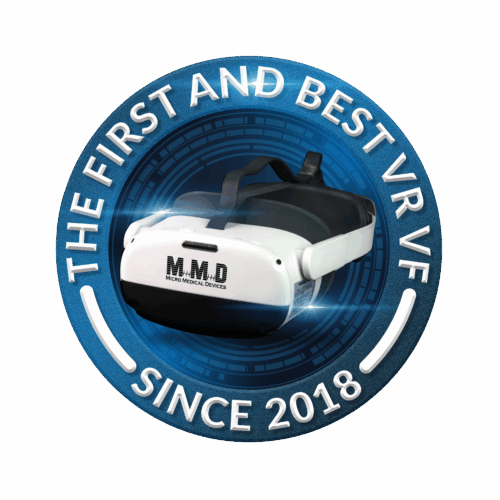
That is where the VF2000 by Micro Medical Devices, powered by VR visual field technology, is transforming care. By removing physical and environmental barriers, the VF2000 makes testing more accessible, adaptable, and accurate for patients of all abilities.
Accessibility in eye care is not just about inclusion. It is about accuracy delivered with compassion
1. The Accessibility Challenge in Traditional Visual Field Testing
Conventional tabletop perimeters were not designed with accessibility as a priority.
Common barriers include:
-
Difficulty sitting upright or maintaining head position
-
Inability to use chin or forehead rests
-
Sensitivity to bright lights or confined spaces
-
Trouble following complex auditory or visual instructions
-
Fatigue during long test durations
These challenges often lead to fixation loss, false positives, and unreliable results, limiting clinical confidence.
When testing is inaccessible, accuracy becomes a privilege instead of a standard.
2. How the VF2000 Removes Accessibility Barriers
The VF2000 redefines perimetry with a lightweight, portable VR headset that adapts to the patient rather than forcing the patient to adapt to the equipment.
Accessibility advantages include:
- No chin rest or rigid positioning
- Testing while seated, reclined, or in a wheelchair
- Full exams in under five minutes per eye
- Voice-guided and adaptive stimuli
- Portable use in clinics, care facilities, or bedside
The VF2000 brings testing to the patient, wherever they are.
3. Supporting Patients with Mobility Limitations
Patients with spinal injuries, stroke history, or post-surgical restrictions often cannot access tabletop perimeters.
The VF2000 enables testing for:
- Wheelchair users
- Bedbound or postoperative patients
- Individuals with tremors or limited head control
True accessibility means fitting the test to the patient, not the patient to the test.
4. Supporting Cognitive and Developmental Disabilities
Patients with autism, Down syndrome, dementia, or traumatic brain injury may struggle with traditional testing protocols.
The VF2000’s vision VR interface simplifies the experience:
- Clear step-by-step audio guidance
- Shorter test durations reduce fatigue
- Immersive visuals help maintain attention
Engagement improves compliance, and compliance enhances reliability.
5. Portable Testing in Special Care and Residential Facilities
Many patients with disabilities reside in nursing homes or rehabilitation centers where traditional perimetry is not available.
The VF2000 enables:
- In-room testing without patient transport
- Secure cloud access for off-site interpretation
- Integration with other portable diagnostics
Virtual perimetry ensures advanced eye care is never location-limited.
6. Enhancing Accuracy with AI and Eye Tracking
Patients with disabilities may have inconsistent response patterns. The VF2000 reduces variability through intelligent design.
Reliability features include:
- Real-time gaze and fixation tracking
- Automatic detection of false positives and negatives
- Adaptive pacing based on patient response speed
Accessible testing must also be accurate testing.
7. Integrating Accessible Diagnostics for Complete Care
Accessibility does not mean sacrificing diagnostic depth. The VF2000 integrates with essential ophthalmic tools.
| Tool | Function | Accessibility Impact |
|---|---|---|
| Biometry / A Scan | Axial length measurement | Portable devices enable bedside testing |
| Pachymetry | Corneal thickness | Quick and patient-friendly |
| Keratometer | Corneal curvature | Compact and adaptable |
| B Scan | Retinal and optic nerve imaging | Ideal for patients unable to fixate |
| CXL | Corneal stabilization | Supports long-term outcomes |
Inclusive care is strongest when diagnostics work together.
8. Staff Training and Best Practices
Technology works best when paired with empathy.
Staff should:
- Explain steps calmly and clearly
- Demonstrate the headset before testing
- Allow rest breaks as needed
- Involve caregivers when appropriate
Accessibility begins with a human connection.
9. Secure Data and Collaborative Care
Accessible care includes responsible data management.
The VF2000 by Micro Medical Devices offers:
- HIPAA-compliant cloud storage
- Encrypted data sharing
- EMR integration for multidisciplinary care
Privacy and accessibility go hand in hand.
10. The Future of Inclusive Eye Care
The future of ophthalmology is inclusive, portable, and patient-adaptive.
What lies ahead:
- Home-based perimetry for non-mobile patients
- AI reliability scoring for non-verbal patients
- Tele ophthalmology powered by VR diagnostics
Accessibility is not optional. It is the foundation of ethical modern care.
Conclusion
Patients with disabilities deserve the same level of diagnostic accuracy as every other patient.
By adopting the VF2000 from Micro Medical Devices, clinicians can deliver VR visual field testing that adapts to every ability, every environment, and every care setting.
When paired with biometry, Pachymetry, B Scan, Keratometer, and CXL, accessible diagnostics become both comprehensive and compassionate.
Ready to make visual field testing accessible for every patient? Contact us today to learn how the VF2000 by Micro Medical Devices can help your practice deliver inclusive, accurate, and patient-centered care.