Corneal Cross Linking is a treatment whose goal is to strengthen the corneal stromal tissue through the formation of new chemical bonds between stromal collagen fibrils.
Corneal Cross Linking Device
Corneal Cross Linking is a treatment whose goal is to strengthen the corneal stromal tissue through the formation of new chemical bonds between stromal collagen fibrils.
SCHEDULE A DEMO30-DAY TRIAL
No deposit. No commitment fee. Try it with your own patients and staff.
What is OMNI Cross Linking System
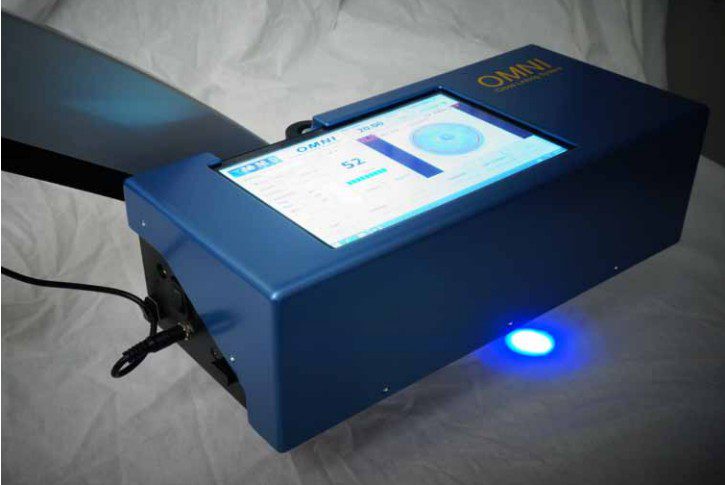
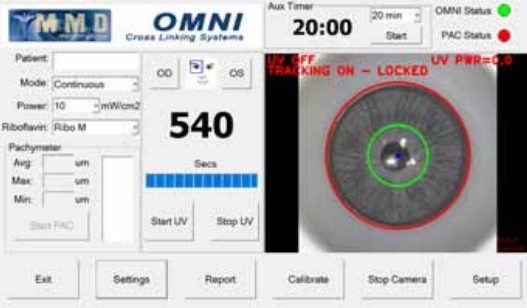
The OMNI Cross Linking System is designed for effective, safe, and user-friendly corneal treatment. It allows precise energy control from 3–45 mW/cm² with automatic timing and supports pulsed radiation for treating infectious keratitis. The built-in infrared camera tracks eye position to maintain proper distance, pausing treatment if movement occurs. It features calibration verification, optional pachymetry with Riboflavin selection, and easy data export via Wi-Fi, Bluetooth, or printer. A 7-inch color touchscreen displays real-time eye monitoring, treatment settings, and remaining time.
PalmScan OMNI Corneal
Cross Linking System
The OMNI Cross Linking System was designed with a special focus on effectiveness, safety and user friendliness incorporating the latest clinical experiances.
Background
Corneal collagen cross-linking is a treatment that uses UV light and a photosensitizer, typically riboflavin, to strengthen the cornea by forming new chemical bonds between collagen fibers. Its main purpose is to stop the progression of ectasia—irregular thinning and bulging of the cornea—that can occur in conditions such as keratoconus or after vision correction surgeries like LASIK. By stabilizing the corneal structure, it helps maintain vision and prevent further distortion.
The procedure works through a process called photopolymerization, in which UV-activated riboflavin generates reactive oxygen molecules that create cross-links between collagen fibers. These bonds increase corneal stiffness and durability, primarily within the anterior stroma, improving corneal strength and long-term stability.
Clinical Experience
Multiple major clinical studies have demonstrated the effectiveness and safety of corneal cross-linking. More than 85% of eyes treated with the procedure show a significant improvement in best-corrected visual acuity (BCVA). Six months after treatment, reductions in corneal cylinder were observed in most patients, confirming the stability and efficacy of the technique.
Testimonials
Contact Us
Call Us
Office: 818-222-3310
Toll-Free: 866-730-0663
WhatsApp (Sales): +1 (818) 798-4569
WhatsApp (Support): +1 (747) 369-5742
Office: 818-222-3310
Toll-Free: 866-730-0663
WhatsApp (Sales): +1 (818) 798-4569
WhatsApp (Support): +1 (747) 369-5742
Micro Medical Devices
23945 Calabasas Rd, Suite 110, Calabasas, CA 91302
23945 Calabasas Rd, Suite 110, Calabasas, CA 91302
Hours
Monday-Friday: 9am-5pm PST
Saturday-Sunday: Closed
Monday-Friday: 9am-5pm PST
Saturday-Sunday: Closed