The year 2025 marks a pivotal shift in optometry and vision care. What was once a practice rooted mainly in manual refraction and basic screening has now evolved into a technologically advanced discipline powered by AI diagnostics, VR testing, and precision imaging.
Modern eye care is no longer confined to detecting refractive errors — it’s about predicting diseases, enhancing surgical accuracy, and providing personalized vision solutions for every patient.
The Rise of VR in Vision Testing
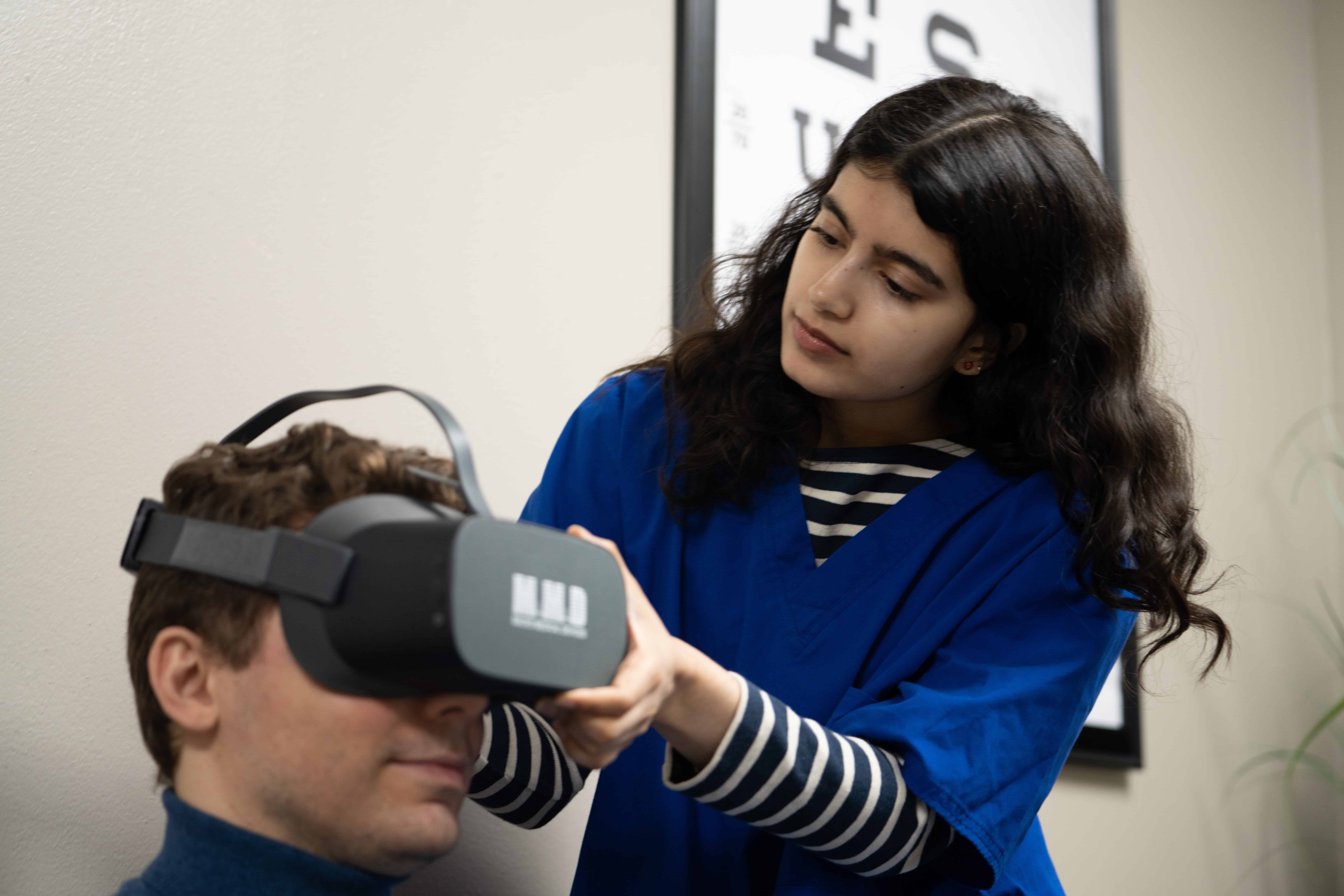
One of the most exciting innovations shaping 2025 is the rise of VR visual field testing. Traditional perimetry — while effective — often required bulky equipment and patient cooperation within clinic walls. Now, with VR visual field systems, comprehensive testing can be done anywhere.
- Portable and immersive: Patients can undergo VR visual field or VR field testing using lightweight headsets.
- AI-assisted analysis: Virtual perimetry and VR perimetry tools instantly detect abnormalities and map field loss patterns.
- Enhanced patient comfort: The immersive environment of VR perimetry reduces anxiety and improves reliability.
These advancements are revolutionizing how optometrists detect glaucoma, retinal disease, and neurological conditions — with accuracy rivaling traditional methods.
The Integration of Smart Diagnostics and Imaging
Modern optometry in 2025 isn’t just about vision correction — it’s about comprehensive ocular health management. The latest diagnostic devices now merge AI analytics with traditional measurements for a 360° view of the eye.
Key instruments leading the way include:
- Biometry – Enables precise intraocular lens (IOL) calculations for cataract and refractive surgeries.
- A-Scan (Ascan) – Measures axial length with unparalleled accuracy.
- B-Scan (Bscan) – Offers detailed ultrasound imaging of posterior segment structures.
- Pachymeter – Used for Pachymetry, which measures corneal thickness, critical in glaucoma and refractive evaluation.
- Keratometer – Determines corneal curvature, aiding contact lens fitting and astigmatism analysis.
- CXL (Corneal Crosslinking) or Corneal Cross-linking – Strengthens the cornea in conditions like keratoconus through UV-light and riboflavin treatment.
These technologies together help clinicians move from reactive treatment to preventive eye care, catching issues before they impact sight.
AI and Data-Driven Decision-Making
Artificial intelligence has become an indispensable ally in optometry. From interpreting OCT scans to predicting the progression of diseases like glaucoma or diabetic retinopathy, AI systems now provide real-time clinical insights.
By learning from millions of data points, AI enhances diagnostic precision and reduces human error — allowing optometrists to focus on personalized patient care.
Furthermore, AI-integrated VR visual field systems can detect subtle field changes over time, ensuring earlier intervention and better outcomes.
Personalized and Remote Eye Care
Tele-optometry and vision VR tools have expanded access to care in 2025. Patients can now receive preliminary screenings, follow-up consultations, and even visual therapy sessions remotely.
VR perimetry and virtual field testing allow accurate assessments without traditional clinical setups, making eye care more inclusive — especially in rural or underserved areas.
Additionally, wearable technologies and biometric tracking integrate seamlessly with smartphones, alerting users to visual strain, blue light exposure, or early signs of ocular fatigue.
Sustainability and Green Optometry
Optometry’s transformation isn’t only digital — it’s also environmental. Clinics are increasingly adopting eco-friendly materials, paperless records, and reusable lens systems.
Even high-tech instruments like pachymeters and biometers are being developed with energy-efficient designs, reducing carbon footprints while maintaining clinical excellence.
The Human Element: Optometrists as Vision Innovators
Despite all the technological advancements, the optometrist’s role remains irreplaceable. The future of vision care emphasizes collaboration — where clinicians interpret technology-driven insights through empathy, education, and patient trust.
Whether using A-Scan, B-Scan, or virtual perimetry, the human connection ensures that treatment remains both personal and precise.
Conclusion
The landscape of optometry in 2025 is defined by innovation, accessibility, and precision.
From VR visual field testing and AI diagnostics to biometry, pachymetry, and corneal cross-linking, technology continues to enhance every aspect of eye care. The fusion of science and compassion ensures that the future of vision care isn’t just about seeing better — it’s about living better.