Patients with visual field complaints, double vision, headaches, reading difficulties, eye strain, neurological symptoms, or sports performance concerns often need more than a standard eye exam. Without the right equipment, many practices refer these patients elsewhere for advanced functional vision testing.
VR Visual Field Platform
Bring Specialty-Level Visual Function Testing Into Your Practice
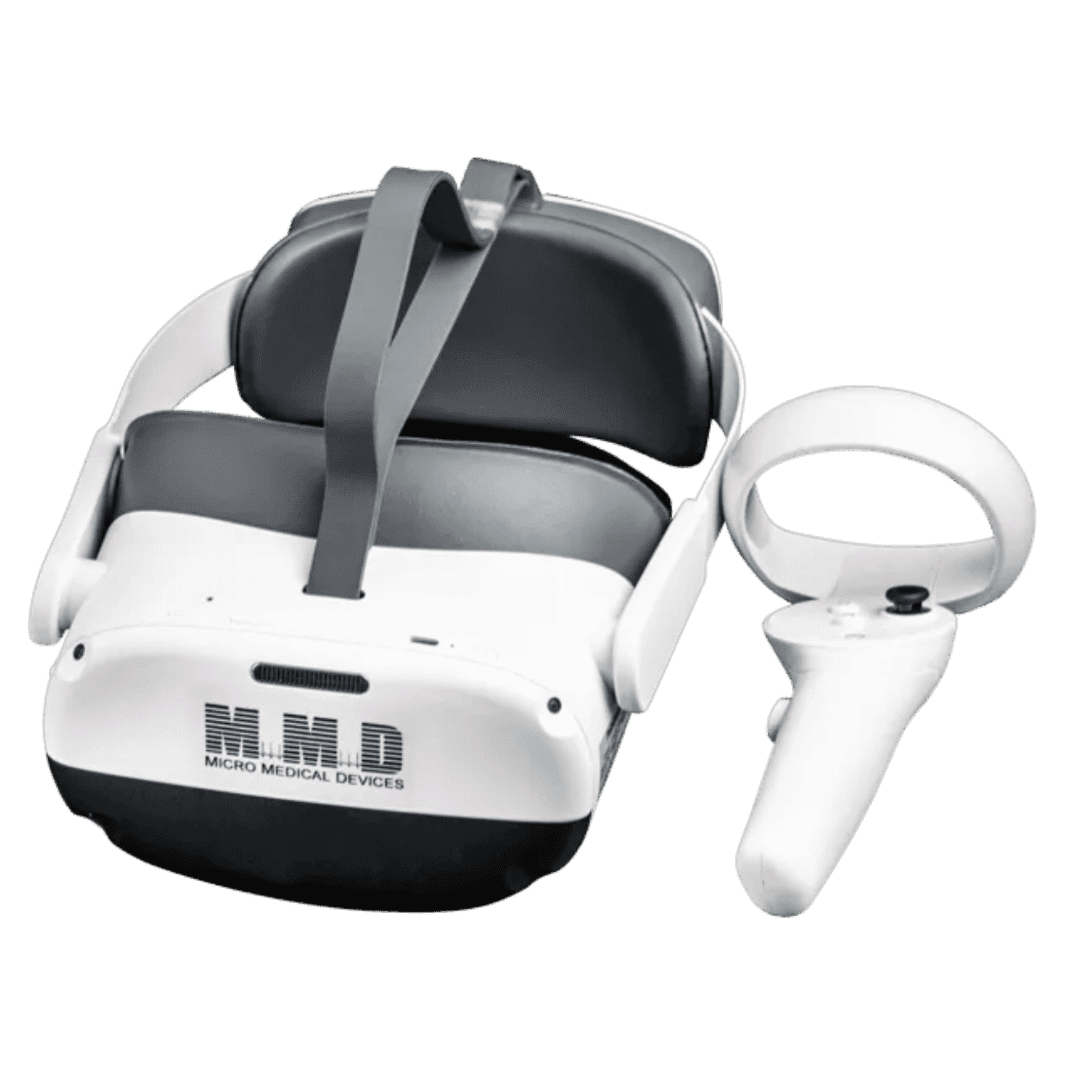
VF2000 helps ophthalmologists and optometrists perform everyday visual field testing while adding advanced capabilities for neuro-visual, binocular vision, vision therapy, and sports vision applications — all in one compact VR platform.
- Keep more testing in-house
- Reduce unnecessary referrals
- Support better documentation and follow-up
- Expand testing capabilities with one device
- Improve patient convenience
SCHEDULE A DEMO30-DAY TRIAL
No deposit. No commitment fee. Try it with your own patients and staff.
The Challenge
Many Practices Refer Patients Out for Testing They Could Perform In-House
VF2000 gives ophthalmology and optometry practices access to many of these testing capabilities in one compact system, helping doctors evaluate patients more completely before deciding whether referral is necessary.
Referral Delays
Patients wait weeks or months for appointments with subspecialty practices, delaying evaluation and care decisions.
Lost Testing Revenue
Advanced functional vision testing that could be performed in-house is instead billed elsewhere, bypassing the referring practice.
Reduced Care Continuity
When patients leave for testing, the referring practice loses the opportunity to monitor, document, and follow up directly.
Patient Inconvenience
Patients must travel to separate facilities, navigate new providers, and coordinate appointments — creating friction and dropout risk.
Limited In-House Data
Without the ability to test in-house, practices rely on outside reports for clinical decisions, reducing control over the patient record.
The Platform
One Compact Platform. Multiple Visual Function Tests.
VF2000 is designed for everyday ophthalmology and optometry workflows first, while also giving practices the ability to incorporate advanced testing commonly associated with neuro-ophthalmology, neuro-optometry, vision therapy, and sports vision.
Visual Field Testing
Standard and threshold perimetry for glaucoma monitoring, neuro-visual assessment, and routine screening — aligned with familiar Humphrey reporting formats.
Optic Nerve Mapping
Supports evaluation of optic nerve-related field patterns and visual pathway concerns commonly associated with neuro-ophthalmic assessment.
Ptosis Field Testing
Documents visual field impact from ptosis with and without lid support — supporting clinical documentation for ptosis evaluation and surgical planning.
Goldmann Kinetic Visual Field
Kinetic perimetry for patients who are difficult to test with standard automated perimetry — useful for neuro-visual and low vision applications.
Frequency Doubling Technology (FDT)
Rapid glaucoma screening using spatial frequency doubling — sensitive for early detection of visual pathway involvement.
Strabismus / Eye Motility
Assess ocular alignment, eye movement range, and motility patterns relevant to strabismus evaluation, diplopia workup, and neuro-visual complaints.
Vision Therapy Monitoring
Track and document visual function changes over time — supporting patient education, progress tracking, and therapy outcome documentation.
Pupillometry
Objective assessment of pupillary response — relevant for neuro-visual evaluation, medication monitoring, and autonomic function concerns.
Color Vision Testing
Extended color vision examination supporting differentiation of congenital and acquired color deficiencies — relevant for optic nerve and visual pathway concerns.
Built for Every Ophthalmologist and Optometrist
VF2000 is a general-practice first platform. Advanced capabilities are available when you need them — not instead of what you already do.
For Ophthalmology Practices
Expand In-House Diagnostic Capabilities
VF2000 helps ophthalmologists expand in-house testing for visual field, glaucoma monitoring, optic nerve-related assessment, ptosis evaluation, eye motility, pupillary response, and color vision — all through one system that fits existing workflows.
Common Use Cases
- Glaucoma suspects and ongoing monitoring
- Optic nerve concerns and follow-up
- Ptosis field documentation for surgical cases
- Double vision and motility complaints
- Neuro-visual symptoms requiring evaluation
- Color vision concerns — acquired or congenital
For Optometry Practices
Add Advanced Functional Testing to Routine Care
VF2000 helps optometrists add advanced functional vision testing to routine care, including visual field, binocular vision, eye movement testing, convergence-related assessment, color vision, pupillometry, and therapy monitoring — without needing subspecialty referral equipment.
Common Use Cases
- Glaucoma screening and monitoring
- Eye strain and chronic headache evaluation
- Reading-related visual complaints
- Double vision and binocular dysfunction
- Sports vision needs and performance concerns
- Neuro-visual complaints after concussion or illness
Expanded Capabilities
Bring More Specialty-Level Testing Into Your Practice
VF2000 allows regular ophthalmologists and optometrists to incorporate many tests commonly associated with advanced subspecialty care. Complex cases should still be referred when appropriate, but VF2000 helps doctors collect more data, support better documentation, and make stronger referral decisions.
Clinical note: VF2000 is not designed to replace neuro-ophthalmologists, neuro-optometrists, vision therapists, or other subspecialists. It is designed to help practices evaluate patients more completely in-house and refer complex cases with better supporting documentation.
Neuro-Ophthalmology Applications
Support In-House Neuro-Visual Evaluation
VF2000 gives ophthalmology practices access to testing capabilities commonly associated with neuro-ophthalmic evaluation — without requiring a subspecialty referral for initial data collection.
Available Tests
- Visual Field Testing (24-2, 30-2, 10-2)
- Optic Nerve Mapping
- Neuro-20 Visual Field Pattern
- Goldmann Kinetic Visual Field
- Frequency Doubling Technology (FDT)
- Pupillometry
- Color Vision Testing
- Strabismus / Eye Motility
Clinical Applications
Supports evaluation of optic nerve-related field patterns, neurological visual field defects, visual pathway concerns, pupillary response, color vision changes, and ocular motility abnormalities — providing clinical data to guide management and referral decisions.
Practices can collect meaningful functional vision data in-house before deciding whether a neuro-ophthalmology referral is clinically necessary, helping reduce unnecessary referrals and supporting stronger documentation when referral is appropriate.
Neuro-Optometry Applications
Assess Binocular Function and Neuro-Visual Complaints
VF2000 helps optometry practices evaluate neuro-visual complaints, binocular function, visual tracking, eye movement control, convergence issues, and rehabilitation progress — supporting more complete in-house assessment.
Available Tests
- Visual Field Testing
- Eye Motility Assessment
- Strabismus Testing
- Vision Therapy Monitoring
- Pursuit Testing
- Saccade Testing
- Convergence Assessment
- Pupillometry
- Color Vision Testing
Clinical Applications
Helps assess neuro-visual complaints, binocular function, visual tracking, eye movement control, convergence issues, and rehabilitation progress — supporting post-concussion, traumatic brain injury, and acquired binocular dysfunction evaluation.
Practices can measure and document functional changes over time, supporting patient education and therapy planning while maintaining continuity of care.
Vision Therapy Applications
Measure and Document Therapy Progress
VF2000 helps practices measure and document therapy-related visual function changes over time, supporting patient education and progress tracking for optometric vision therapy programs.
Available Tests
- Vision Therapy Monitoring
- Pursuit Testing
- Saccade Testing
- Convergence Testing
- Reading-Related Visual Function
- Eye Motility / Strabismus Assessment
Clinical Applications
Provides objective measurement of visual function changes throughout a therapy program — helping clinicians document progress, adjust protocols, and communicate treatment outcomes to patients and families.
Baseline and interval testing with VF2000 can help practices demonstrate measurable changes associated with vision therapy interventions over time.
Sports Vision Applications
Support Athletic Visual Function Assessment
VF2000 supports assessment of tracking, peripheral awareness, binocular coordination, depth perception, 3D spatial localization, and the brain’s ability to recognize object location in space — relevant to sports vision programs in ophthalmology and optometry practices.
Available Tests
- Peripheral Visual Field Testing
- Strabismus / Eye Motility
- Pursuit Testing
- Saccade Testing
- Convergence Assessment
- Pupillometry
- Color Vision Testing
Clinical Applications
Our strabismus and eye motility testing can help assess how athletes visualize objects in three-dimensional space, supporting depth perception, spatial awareness, timing, hand-eye coordination, and object localization.
Sports vision assessments with VF2000 can support baseline visual function profiling, performance monitoring, and post-injury return-to-play evaluation for patients engaged in competitive or recreational sports.
Practice Benefits
Why Keep More Testing In-House?
From patient experience to clinical control, in-house functional vision testing offers meaningful advantages for practices of every size.
Reduce Unnecessary Referrals
Test more patients in-house before determining whether subspecialty referral is clinically necessary.
Improve Patient Convenience
Patients receive comprehensive evaluation in one familiar setting, reducing travel and appointment coordination.
Preserve Continuity of Care
Maintain control over the patient’s visual function record, enabling better longitudinal monitoring and follow-up.
Strengthen Documentation
Generate structured, objective testing data to support clinical decision-making, referral letters, and medical records.
Support Better Referral Decisions
Refer complex cases with richer supporting data — enabling more effective specialist consultations when they occur.
Expand Clinical Services
Add visual function testing capabilities your practice may not currently offer, supporting a broader patient population.
Improve Equipment Utilization
One compact VR platform supports multiple testing applications, maximizing return on a single device investment.
Billable Testing Opportunities
In-house functional vision testing may create additional reimbursable service opportunities when medically appropriate and properly documented.
Reimbursement note: More in-house testing may support additional reimbursable services when medically necessary, properly documented, and payer requirements are met. Practices should verify coverage with their billing team and payer contracts.
Practice Economics
Testing That May Support Clinical Care and Practice Economics
Several CPT codes may be relevant to VF2000 testing applications, subject to payer policy and clinical documentation.
Important disclaimer: Reimbursement varies by payer, location, provider type, documentation, medical necessity, and payer policy. The CPT codes listed below are provided for informational purposes only. Practices should verify coverage with their billing team and payer contracts before assuming reimbursability. VF2000 does not guarantee reimbursement for any service. Estimated reimbursement should be verified using the Medicare Physician Fee Schedule, payer contracts, and local billing guidance.
VF2000 Modules, Available Tests, CPT Code Reference, and Model Availability
| Module | Available Tests | CPT Code / Related Service | G2 | NEO |
|---|---|---|---|---|
| Visual Field Test (30 tests) | Threshold (9 tests): 24-2, 30-2, 10-2, 24-2C, … Screening (7 tests) / Ptosis (5 tests) / Neuro (3 tests) / Kinetic/Ptosis (5 tests) / Optic Nerve Mapping | 92081 92082 92083 Limited / Intermediate / Extended Visual Field Exam. May apply to visual field screening, threshold perimetry, glaucoma monitoring, kinetic testing, neuro patterns, and other medically necessary VF applications when properly documented. | Yes | Yes |
| FDT (4 tests) | C20-1, C20-5, N30-1, N30-5 | No specific CPT code listed here. Verify payer policy and documentation requirements. | Yes | Yes |
| Vision Screening | Visual Acuity / Contrast Sensitivity / Stereopsis / Ishihara Color Test / Farnsworth D15 Color Test | 92283 Extended Color Vision Exam. May apply to qualifying extended color vision testing such as Farnsworth D15 when medically necessary. Verify payer coverage. | Yes | Yes |
| Advanced Color Test | Color Threshold Sensitivity | 92283 Extended Color Vision Exam. Relevant for acquired color deficiency evaluation and optic nerve/pathway assessment when medically indicated. | Yes | Yes |
| Pupil Response Testing / Pupillographer | Pupillary response testing | 95919 Verify clinical indication, payer policy, and documentation requirements. | No | Yes |
| Vision Therapy Monitoring | Vision therapy monitoring / binocular function tracking | 92012 Verify payer-specific requirements and whether the service is covered for the clinical scenario. | No | Yes |
| Strabismus / Eye Motility (Sensorimotor Exam) | Sensorimotor exam, ocular motility, ocular alignment, and binocular function assessment | 92060 Sensorimotor Examination. May apply to strabismus or eye motility assessment when appropriate and properly documented. | No | Yes |
| Dark Adaptation (not included in packages) | Dark adaptation testing | 92284 Not included in standard packages. Verify payer coverage and medical necessity requirements. | No | Yes |
| Optokinetic (Saccades, SP) | Saccades and smooth pursuit testing | 92544 Verify payer coverage, documentation, and clinical indication before billing. | No | Yes |
The CPT codes listed in the table above are provided for general informational purposes only. They do not represent a complete billing guide, and coverage determinations are made by individual payers. Practices should consult their billing team, refer to the Medicare Physician Fee Schedule (MPFS), and review individual payer contracts to determine applicable reimbursement for specific services in their area.
Why VF2000
Refer When Needed. Test More In-House When Appropriate.
VF2000 is not designed to replace subspecialists. It is designed to help practices collect more visual function data in-house, reduce unnecessary referral delays, and refer complex cases with stronger supporting documentation.
Without VF2000
With VF2000
- Practice performs many advanced visual function tests in-house
See How VF2000 Can Fit Into Your Practice Workflow
Schedule a live demo to see how VF2000 supports everyday visual field testing while opening the door to advanced functional vision applications.
SCHEDULE A DEMO30-DAY TRIAL
FAQ
Frequently Asked Questions
Common questions from ophthalmologists and optometrists exploring VF2000.
Is VF2000 only for specialty clinics?
No. VF2000 is designed for regular ophthalmology and optometry practices first. Everyday visual field testing — glaucoma monitoring, threshold perimetry, screening — is the primary use case. Advanced specialty-level capabilities are available as an additional layer for practices that want to expand their testing menu without adding separate instruments.
Does VF2000 replace neuro-ophthalmologists or other subspecialists?
No. VF2000 helps practices perform many tests in-house and collect better functional vision data — while complex cases should still be referred when clinically necessary. The goal is to help doctors make better-informed decisions about when referral is appropriate and to send patients with stronger supporting documentation when referral is needed.
Can VF2000 help reduce referrals?
It may help reduce unnecessary referrals by allowing practices to perform many advanced visual function tests internally. Patients who previously required referral simply for initial data collection may be more fully evaluated in-house, allowing the referring doctor to determine whether specialist consultation is truly needed before making that referral.
What type of patient may benefit from VF2000 testing?
Patients who may benefit from VF2000 testing include those presenting with: visual field complaints, glaucoma concerns, optic nerve findings, ptosis evaluation needs, double vision or eye movement complaints, eye strain and headaches, reading-related difficulties, neuro-visual symptoms (including post-concussion), and sports vision needs. The system is designed to be useful for a broad range of patients seen in general ophthalmology and optometry practices.
Are these tests reimbursable?
Some testing performed with VF2000 may be reimbursable when medically necessary, properly documented, and supported by applicable payer policy. Reimbursement varies significantly by payer, provider type, location, and documentation. Practices should verify coverage with their billing team, review individual payer contracts, and consult the Medicare Physician Fee Schedule for applicable service codes before assuming reimbursability for any specific service. VF2000 does not guarantee reimbursement.
How long does it take for staff to learn VF2000?
Technicians typically become fully proficient with VF2000 in under one hour. The system includes narrated patient instructions, reducing technician burden during testing. Reporting formats are aligned with familiar Humphrey Field Analyzer outputs, minimizing the learning curve for clinicians interpreting results.
What makes VF2000 different from a traditional perimeter
VF2000 is a compact VR-based platform that replaces multiple instruments with one device. It combines visual field testing with a broad menu of additional functional vision tests — including color vision, pupillometry, eye motility, vision therapy monitoring, and more — in a single portable system. Its compact size accommodates mobility-limited patients, and its VR interface supports consistent testing conditions in a smaller footprint than traditional perimeters.