Accurate visual field testing is essential for glaucoma management and functional vision assessment. Among the most widely used patterns, the 24 2 and 24-2C strategies provide critical insight into both central and peripheral visual performance.
Mastering these exams requires more than simply running the test. It demands the right workflow, patient preparation, and modern technology, such as virtual reality visual field systems like the VF2000 from Micro Medical Devices.
Precision in perimetry translates directly to precision in patient care, and today’s technology makes that easier than ever.
1. Understand the Difference Between 24 2 and 24-2C
Both tests assess 24 degrees of the central field, but differ in point density and diagnostic sensitivity.
| Test Pattern | Test Points | Focus Area | Best For |
|---|---|---|---|
| 24-2 | 54 points, 6° spacing | Central and mid-peripheral areas | Standard glaucoma and neuro-ophthalmic exams |
| 24-2C | 64 points, adds 10 central points | Enhanced central resolution | Early central loss in glaucoma |
The VF2000 includes both strategies, allowing clinicians to switch easily between 24 2 and 24-2C testing for a smoother workflow and improved comfort.
Use 24-2C for early glaucoma, post-CXL monitoring, or cases requiring detailed central sensitivity.
2. Optimize Patient Comfort and Positioning
Traditional tabletop perimeters often challenge patient comfort with chin rests, dim rooms, and long sessions.
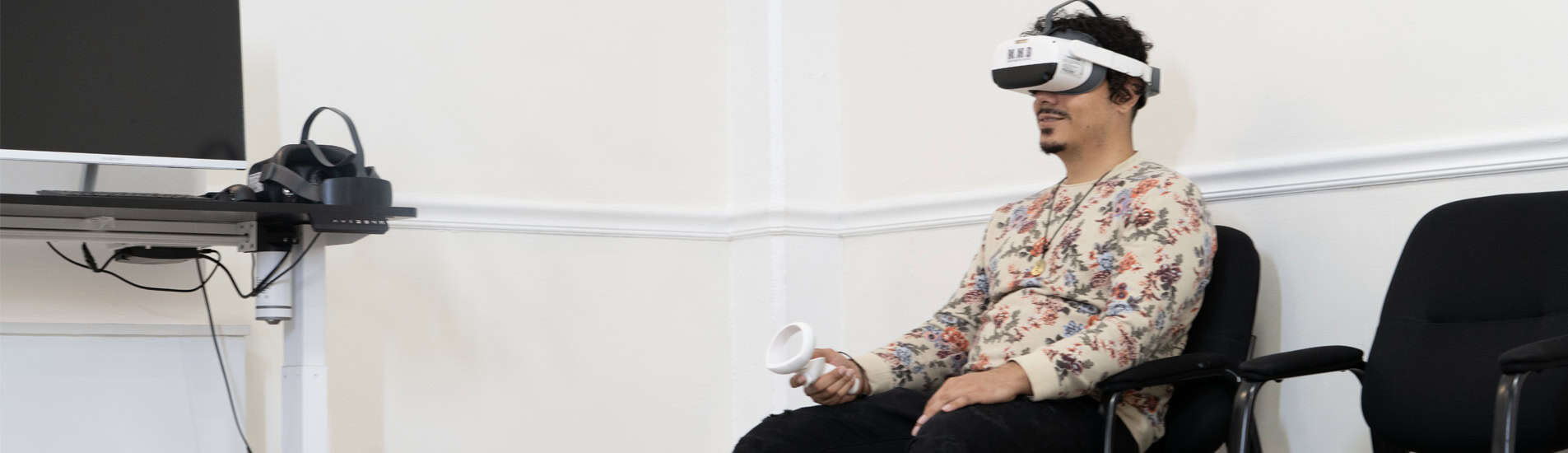
The VF2000 transforms the experience:
-
Lightweight VR headset
-
No chin rest or patching
-
Testing in any lighting, seated or reclined
-
An immersive VR environment that reduces stress
A comfortable patient performs more consistently and produces more reliable results.
A relaxed patient is a reliable patient.
3. Ensure Proper Fixation and Minimize False Positives
Fixation loss and false responses compromise test accuracy.
The VF2000 uses real-time gaze tracking to monitor fixation continuously and flag drift or inattention.
Fixation best practices:
-
Explain the fixation target before testing
-
Reassure patients that brief breaks are normal
-
Encourage steady looking rather than searching
VR perimetry includes built-in reliability indicators, reducing interpretation guesswork.
4. Leverage Technology for Speed and Efficiency
Traditional 24 2 and 24-2C tests can take up to 10 minutes per eye.
The VF2000 completes full threshold exams in under 5 minutes per eye without losing diagnostic quality.
What improves speed and accuracy:
-
Adaptive testing algorithms
-
AI mapping that avoids unnecessary stimuli
-
Intuitive interface with visual and voice guidance
Fast testing does not mean rushed testing. It means optimized precision.
5. Integrate Functional and Structural Testing for Stronger Analysis
Functional field results carry the most clinical value when correlated with structural imaging.
Ophthalmologists often pair the VF2000 tests with:
| Tool | Purpose | Benefit |
|---|---|---|
| Biometry / A Scan | Axial length and IOL planning | Links ocular length to functional sensitivity |
| Pachymetry | Corneal thickness | Supports glaucoma progression analysis |
| Keratometer | Corneal curvature | Detects irregularity affecting uniformity |
| B Scan | Posterior imaging | Connects retinal structure to field defects |
| CXL | Corneal stability | Tracks functional changes after treatment |
Structure explains why. The function shows how. Together, they complete the clinical picture.
6. Use Data Analytics to Monitor Progression
Long-term visual field comparison is essential for early glaucoma detection.
The VF2000 stores all results in a cloud-based system that tracks:
-
MD and PSD
-
Reliability indices
-
Side-by-side comparisons
-
Trend analysis
-
EMR synchronized reports
Cloud-based data transforms follow-up testing into a precision-guided strategy.
Bonus: When to Choose 24-2C Instead of 24 2
The 24-2C pattern captures early central defects with higher sensitivity.
Choose 24-2C for:
-
Early glaucoma
-
High myopia
-
Post-CXL or corneal irregularities
-
Post-surgical recovery
24-2C is your high-resolution lens for central function.
The Future of Visual Field Testing
The next era of diagnostics combines VR perimetry, AI analysis, portability, and remote testing.
The VF2000 already supports:
-
AI-assisted progression tools
-
Home-based VR perimetry development
-
Integration with OCT, fundus imaging, and Pachymetry
-
Multi-device data synchronization
The future of perimetry will be smarter, faster, and more accessible than ever.
Conclusion
Mastering 24 2 and 24-2C visual field exams requires both technique and technology.
With the VF2000 by Micro Medical Devices, clinicians gain faster, more accurate, and more comfortable testing for glaucoma, post-CXL assessments, and corneal stability analysis.
Combined with biometry, Pachymetry, B Scan, and Keratometer data, the VF2000 empowers eye care professionals to deliver an efficient, evidence-based, future-ready standard of care.
Ready to elevate your visual field testing? Contact us today to see how the VF2000 by Micro Medical Devices transforms 24 2 and 24-2C exams with unmatched speed, accuracy, and patient comfort.