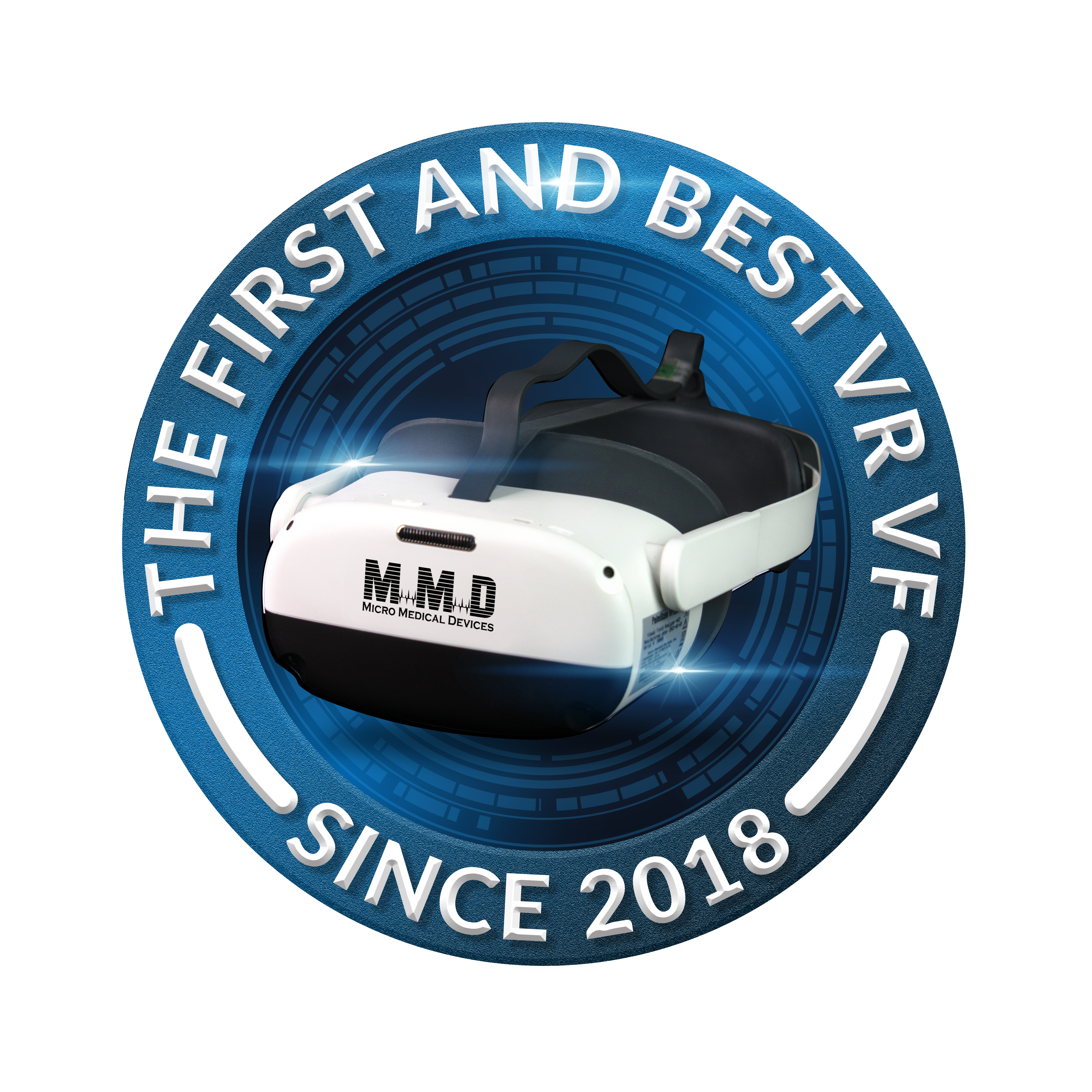

Visual field testing plays a critical role in diagnosing and managing glaucoma, retinal disease, and neurological conditions. Yet for many years, access to this essential diagnostic test has been limited by large equipment, long exam times, and the need for dedicated dark rooms. These barriers have made testing difficult for patients with mobility challenges, physical disabilities, or limited access to specialized clinics.
Virtual Field changes this reality by delivering accurate visual field testing through a portable virtual reality platform. By combining clinical precision with comfort and flexibility, Virtual Field makes functional vision testing accessible to more patients and more care settings than ever before.
1. The Accessibility Limitations of Traditional Visual Field Testing
Conventional perimetry systems have defined the clinical standard, but they also create real-world obstacles for both patients and practices.
Common accessibility challenges include:
- Large equipment requiring dedicated rooms
- Inflexible setups are unsuitable for mobile or remote care
- Physical strain from chin rests and fixed posture
- Long test durations that increase fatigue
- High acquisition and maintenance costs for practices
These limitations often prevent vulnerable or underserved populations from receiving timely visual field evaluations.
2. How Virtual Field Improves Accessibility Through Design
Virtual Field addresses these barriers through virtual perimetry using a lightweight headset that delivers consistent and validated results in nearly any environment.
Key accessibility features include:
- No dark room required
- Portable headset-based testing
- Short exam times with full threshold accuracy
- AI-supported fixation and reliability monitoring
- Secure cloud storage for test results
This design allows clinicians to bring testing directly to patients instead of requiring patients to travel to specialized facilities.
3. Inclusive Visual Field Testing for Diverse Patient Populations
Accessibility is not limited to location. It also means ensuring that testing works for patients of different ages, abilities, and clinical needs.
Virtual Field supports inclusive care for:
- Elderly patients who struggle with traditional positioning
- Children who benefit from guided and engaging testing
- Patients using wheelchairs or needing reclining exams
- Individuals with physical or neurological limitations
- Multilingual populations through audio-guided instructions
This approach improves cooperation, comfort, and test reliability across a wide patient base.
4. Clinical Accuracy Without Sacrificing Accessibility
Improving access does not come at the expense of diagnostic confidence. Virtual Field has been clinically validated against traditional perimetry systems.
Clinical capabilities include:
- Strong correlation with standard Mean Deviation and Pattern Standard Deviation values
- Real-time eye tracking to detect fixation loss
- Threshold and suprathreshold testing options
- Longitudinal tracking through cloud-based analytics
These features ensure that accessible testing remains clinically meaningful.
5. Integrating Virtual Field Into a Modern Diagnostic Workflow
Virtual Field fits naturally into a comprehensive eye care workflow that combines functional testing with structural diagnostics.
Supporting tools often include:
- A-Scan biometry and keratometry from Micro Medical Devices
- Pachymetry for corneal thickness evaluation
- B-Scan imaging for posterior segment assessment
- Corneal crosslinking systems for post-treatment monitoring
Together, these technologies provide a balanced view of structure and function for more informed clinical decisions.
6. Expanding Visual Field Testing Beyond the Clinic
Portability allows Virtual Field to reach patients who previously lacked access to perimetry.
Common outreach and expanded care settings include:
- Mobile eye clinics serving rural communities
- Nursing homes and rehabilitation centers
- Corporate wellness and occupational screening programs
- Home-based monitoring for chronic conditions
By removing location constraints, Virtual Field supports broader population health initiatives.
7. Supporting Tele-Ophthalmology and Remote Care
Virtual Field integrates seamlessly with telemedicine workflows, enabling remote collaboration and follow-up care.
Telehealth advantages include:
- Secure cloud-based data sharing
- Remote specialist review of test results
- Ongoing monitoring for glaucoma and neurological patients
- Coordinated care between optometrists and ophthalmologists
This makes functional vision testing viable even when in-person visits are limited.
8. Flexibility Across Clinical and Nontraditional Environments
Virtual Field is designed to perform consistently across a wide range of clinical and nonclinical settings.
Common use environments include:
- Private practices and hospital clinics
- Community health centers
- Academic research facilities
- Military and occupational health programs
- Vision screening initiatives and outreach events
This flexibility allows practices to expand services without compromising quality.
9. Cost-Effective Accessibility for Eye Care Practices
Traditional perimeters often require significant investment and dedicated space. Virtual Field lowers these barriers while increasing testing capacity.
Practice-level benefits include:
- Reduced equipment and maintenance costs
- No need for room modifications
- Faster patient throughput
- Improved return on investment through increased testing volume
Accessibility for patients begins with sustainability for providers.
10. The Future of Accessible Visual Field Testing
As eye care continues to evolve, accessible diagnostics will play an increasingly important role. Virtual Field leads this shift by combining portability, AI-driven analytics, and patient-centered design.
Future advancements will include:
- Home-based visual field monitoring
- Predictive analytics for earlier disease detection
- Deeper integration with imaging and biometric platforms
These innovations will further remove barriers to functional vision assessment.
Conclusion
Virtual Field has transformed visual field testing into a more accessible, flexible, and patient-centered diagnostic solution. By combining virtual reality perimetry with AI-supported accuracy and integration alongside technologies such as biometry, Pachymetry, B-Scan imaging, keratometry from Micro Medical Devices, and corneal crosslinking systems, clinicians can deliver high-quality visual field testing to patients regardless of location or mobility.
Expand access to reliable visual field testing in your practice.
Call us today to learn how Virtual Field and Micro Medical Devices can help you deliver accurate, accessible vision diagnostics anywhere care is needed.