In today’s fast-changing world of ophthalmic technology, Virtual Field by Micro Medical Devices has become a true breakthrough in visual field testing. What began as a forward-thinking concept that combined perimetry with virtual reality has evolved into a powerful and practical solution. It is now redefining how eye care professionals perform functional vision assessments.
Whether you are an independent optometrist, an ophthalmologist with multiple clinics, or part of a hospital network, this virtual reality visual field platform delivers portability, efficiency, and accuracy while improving patient comfort and satisfaction.
If you know about Virtual Field but have not yet introduced it into your workflow, this guide explains how to try it, implement it, and scale it so you can turn interest into clinical and financial value.
1. Why Practices Are Switching to Virtual Visual Field Testing
Traditional bowl perimeters have long been standard, yet they are large, restrictive, and require dark rooms and time-consuming exams.
Virtual perimetry brings a modern, mobile, and patient-friendly alternative designed for the future of eye care.
Key Advantages of Virtual Field Technology
- Portability: Perform VR perimetry anywhere, including exam rooms, mobile clinics, or nursing facilities.
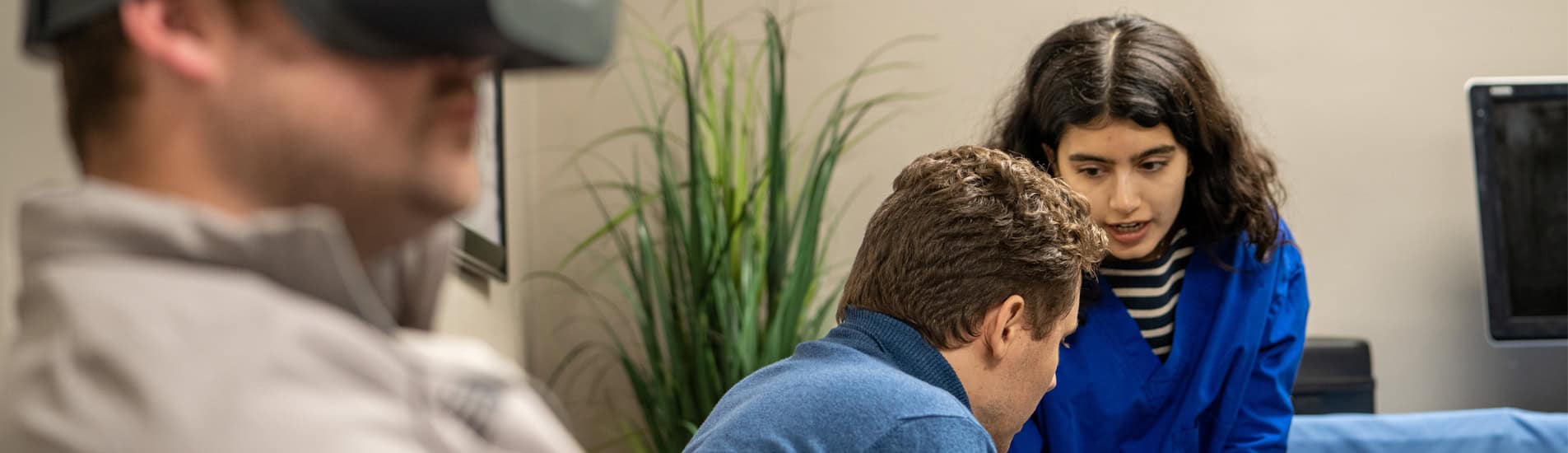
- Comfort: Lightweight headset, no chin rest, and minimal preparation.
- Speed: Exams take only minutes, reducing patient fatigue.
- Accuracy: Gaze tracking and reliability indices support dependable results.
- Integration: Syncs smoothly with EMR and practice management systems.
The goal is not only to replace traditional perimetry but also to elevate your entire workflow through smarter, connected testing.
2. Step 1: Try It and Experience Virtual Reality Perimetry Firsthand
Starting with a Virtual Field trial allows your team to experience the technology in real clinical conditions.
What to Expect During a Trial
- Hands-on testing with staff or patients
- Side-by-side comparison of results with your traditional perimeter
- Detailed report review including CPT-coded outputs (92081–92083)
- Workflow testing in various environments, such as clinics, outreach events, or pre-op evaluations
Most providers are surprised at how quickly both patients and staff become comfortable with the virtual reality testing format.
Many patients report that the experience feels easier, faster, and more modern.
3. Step 2: Implement It and Integrate Virtual Field into Your Workflow
Once you complete the trial, the next step is seamless integration. Virtual perimetry should work naturally within your diagnostic and administrative processes.
Implementation Checklist
- Set clear testing protocols for glaucoma, neuro, and pre-surgical evaluations
- Train technicians, which takes only minutes
- Sync Virtual Field directly with your EMR
- Use standardized reporting templates for consistent documentation
- Educate patients about the comfort and speed of VR testing
Implementation is not about learning a complex system. It is about simplifying the process you already use.
4. Step 3: Love It and Experience the Clinical Impact
After adoption, clinics quickly see improvements in efficiency and patient satisfaction.
Benefits for Patients
- No chin rests, bright lights, or uncomfortable positioning
- Faster testing with fewer errors
- Ideal for children, older adults, and patients with mobility issues
Benefits for Clinicians
- Improved test compliance and reliability
- Objective, repeatable data for monitoring disease progression
- Better patient satisfaction and higher-quality referrals
Virtual Field shifts visual field testing from a stressful task to a smooth, data-rich experience aligned with patient-centered care.
5. Step 4: Scale It and Expand Your Practice Potential
Once you see consistent outcomes, you can expand Virtual Field across multiple locations or combine it with other diagnostics.
Ways to Scale Efficiently
- Add additional units in multi-clinic environments
- Use VR perimetry in mobile outreach programs
- Integrate with diagnostics such as biometry, Pachymetry, Keratometry, and B-Scan imaging
- Support pre-op and post-op evaluations, including cataract or CXL procedures
Scaling improves both patient care and practice productivity, allowing more efficient testing every day.
6. Virtual Field in Comprehensive Eye Care
Virtual Field by Micro Medical Devices fits into nearly every subspecialty, making it one of the most adaptable tools in modern ophthalmology.
| Subspecialty | Use Case for Virtual Field |
|---|---|
| Glaucoma | Track progression with reliable visual field data |
| Neuro-Ophthalmology | Identify visual pathway defects |
| Cornea and Refractive | Assess vision before and after CXL or LASIK |
| Pediatric Eye Care | Engage younger patients with VR-based testing |
| Cataract and Surgery | Establish pre-op and post-op baselines alongside biometry and A-scan |
7. Enhancing Documentation and Reimbursement
Virtual Field automatically generates complete, audit-ready reports that support accurate documentation and billing.
Included in Reporting
- Test type and CPT code (92081–92083)
- Fixation and reliability indices
- Field maps and statistical summaries
- Examiner information, device Serial Number, and test date
When combined with diagnostics such as Pachymetry, biometry, and B-Scan, Virtual Field supports strong clinical justification for payer reviews.
Better documentation leads to faster reimbursements and fewer denials.
8. The Future: Virtual Field, AI, and Integrated Diagnostics
The next stage of innovation combines artificial intelligence with functional and anatomical diagnostics.
Imagine a unified platform with
- Virtual reality perimetry
- Biometry and B-Scan imaging
- Corneal metrics from Pachymetry
- AI-driven predictions for disease progression
Virtual Field is becoming the foundation of an intelligent, connected diagnostic ecosystem.
9. Success Stories: From Trial to Transformation
Practices that once struggled with slow workflows or inconsistent test results often see dramatic improvements after adopting Virtual Field.
Example Outcome
- Before: 10 to 12 visual field tests per day
- After Virtual Field: More than 20 tests per day
- Near-zero fatigue complaints
- Diagnostic revenue increased by approximately 25 percent
These results are consistent across independent practices and large eye care networks.
10. Ready to Begin Your Transformation
Getting started is simple.
- Request a demo or trial
- Test Virtual Field with real patients
- Integrate it into your workflow
- Watch your clinical efficiency and patient experience improve
Ready to upgrade your visual field testing? Connect with Micro Medical Devices to request your Virtual Field demo, schedule a trial, or speak with a product specialist. Discover how easy it is to bring fast, accurate, and patient-friendly perimetry into your practice.
Take the first step toward smarter diagnostics. Your transformation starts today.