
In Ontario, safe driving depends on more than just clear central vision. It also requires adequate visual field awareness. The Ministry of Transportation of Ontario (MTO) enforces strict vision and visual field requirements for driver’s licenses to ensure all motorists meet the visual standards necessary for road safety.
For eye care professionals, understanding these MTO requirements and choosing the right testing technology is essential for accurate assessment and reporting. With the increasing adoption of virtual reality visual field systems like the VF2000 by Micro Medical Devices, evaluating visual function for driving eligibility has never been more efficient, comfortable, or reliable.
Clear vision keeps you safe, but full visual awareness keeps everyone safe.
1. Why the MTO Requires Vision and Visual Field Testing
Driving relies heavily on both central and peripheral visual function. The MTO requires visual field assessments to verify that drivers can:
Detect hazards from multiple directions
React quickly to changing road conditions
Maintain awareness of vehicles and pedestrians in the surrounding areas
Optometrists and ophthalmologists play a critical role in confirming these capabilities through standardized visual acuity and visual field testing.
Visual field testing is not simply a diagnostic tool. It is a safety measure that directly impacts licensing and mobility.
2. The MTO’s Vision Standards for Driving in Ontario
To qualify for a Class G license, the MTO requires:
Visual Acuity: 20/50 or better in at least one eye
Horizontal Visual Field: Minimum 120 degrees continuous horizontal field with 15 degrees above and below fixation
Commercial license requirements (A, B, C, D, E, F) are more stringent:
Visual Acuity: 20/30 or better in each eye
Visual Field: Minimum 150 degrees horizontal and 20 degrees vertical per eye
These standards ensure drivers maintain adequate peripheral awareness for safe road navigation.
3. How Visual Field Testing Is Performed for MTO Requirements
Historically, MTO assessments were performed using Humphrey or Goldmann bowl perimetry. Modern practices now rely on portable, accurate solutions such as virtual reality perimetry.
Modern Testing Options
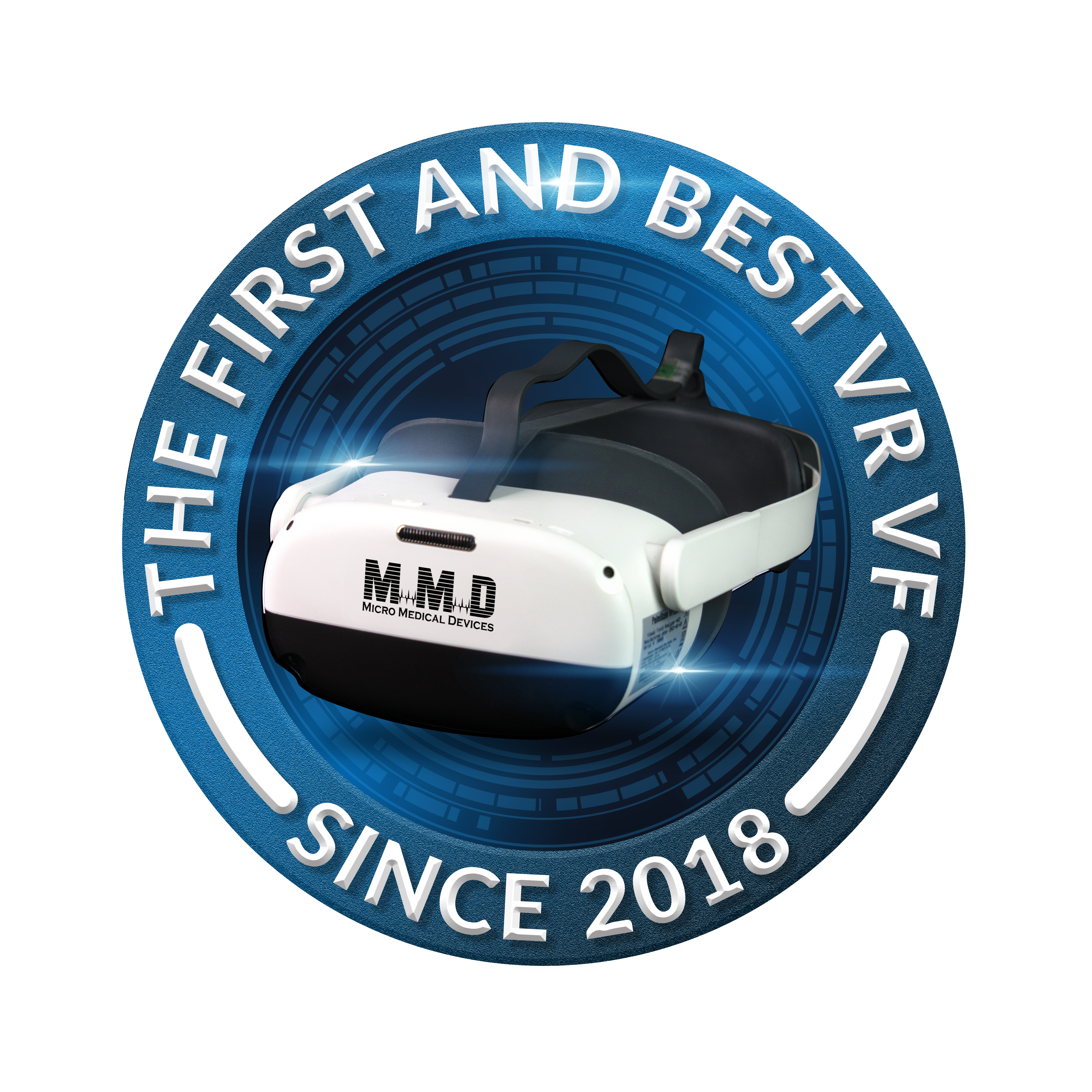
The VF2000 by Micro Medical Devices
Kinetic and threshold perimetry
Integrated eye tracking for fixation accuracy
VR perimetry delivers the reliability of traditional perimetry with greater accessibility and patient comfort.
4. The VF2000: Simplifying MTO Compliant Testing
The VF2000 by Micro Medical Devices has become a preferred solution for vision field assessments related to driver’s license eligibility across Ontario.
Why Eye Care Professionals Trust The VF2000
Portable and mobile testing
AI-enhanced visual field accuracy
Full threshold tests completed in under five minutes
Comfortable VR environment
EMR-ready, MTO-compliant reports
💬 The VF2000 combines portability, accuracy, and efficiency in a way that perfectly supports MTO vision testing requirements.
5. MTO Report Submission: What Clinicians Need to Know
After testing, practitioners must complete the MTO Vision Report Form (Form 3649) with precision.
What Must Be Reported
Corrected and uncorrected visual acuity
Total horizontal and vertical field extent
Documented scotomas or defects
Type of perimetry performed, such as the VF2000
Practitioner signature and license details
💡 Accurate documentation ensures transparency throughout the MTO review process.
6. The Role of Advanced Diagnostics in Vision Testing
While the VF2000 testing provides essential functional data, many clinicians also rely on additional diagnostics before completing MTO paperwork.
| Tool | Purpose | Relevance to MTO Testing |
|---|---|---|
| Biometry / A Scan | Axial length measurement | Supports visual clarity considerations |
| Pachymetry | Corneal thickness | Helps interpret stability and potential IOP concerns |
| Keratometer | Corneal curvature | Identifies irregularities affecting acuity |
| B Scan | Posterior segment imaging | Detects pathologies that may affect visual fields |
| CXL treatments | Corneal stabilization | Supports post-treatment vision integrity |
Combining the VF2000 data with other ocular diagnostics gives a complete perspective of a patient’s driving vision capability.
7. Common Reasons for MTO Restrictions or Referrals
Drivers may face restrictions or medical review if they present:
Field loss greater than 20 degrees in any quadrant
Central scotomas that compromise fixation
Single eye vision without adequate compensatory function
Progressive retinal or optic nerve disease
The VF2000’s reliability metrics help clearly distinguish true defects from testing artifacts.
8. How Virtual Reality Perimetry Improves Accessibility in Ontario
Portable VR testing expands access to MTO-compliant vision assessments, especially in underserved communities.
The VF2000 Testing Can Be Performed In
Long-term care homes
Rural clinics
Occupational and workplace screenings
Vision rehabilitation centers
💬 Bringing testing directly to patients supports equitable access throughout Ontario.
9. Integrating The VF2000 into Your Workflow
The VF2000 by Micro Medical Devices is designed for modern practices that value speed and accuracy.
Training takes minutes
Wireless connectivity for easy setup
Comfortable testing with minimal movement
Auto-generated EMR-ready reports
💡 The VF2000 is simple to use, space-efficient, and ideal for practices handling MTO evaluations.
10. The Future of Vision Testing in Ontario
As diagnostic technology evolves, virtual reality perimetry and AI-based analytics will continue to transform MTO-compliant assessments.
What’s Coming Next
AI-powered visual field interpretation
Cloud-based submissions to MTO portals
Integration with additional diagnostics such as biometry and B-Scan
The VF2000 supports Ontario’s commitment to road safety through accurate, modern vision testing.
Conclusion
Understanding and meeting MTO visual field requirements is essential for protecting public safety and supporting patient independence. With virtual visual field technology from Micro Medical Devices, clinicians can perform precise, efficient, and accessible testing that aligns fully with MTO standards.
From biometry and Pachymetry to VR-based perimetry, modern diagnostics ensure that every driver on Ontario’s roads sees clearly and safely.
Support your patients with accurate, MTO-compliant testing. Contact us today to learn how the VF2000 by Micro Medical Devices can streamline visual field evaluations with greater comfort, precision, and efficiency.